How to Choose the Best Ceramic Soup Bowls for Your Kitchen?
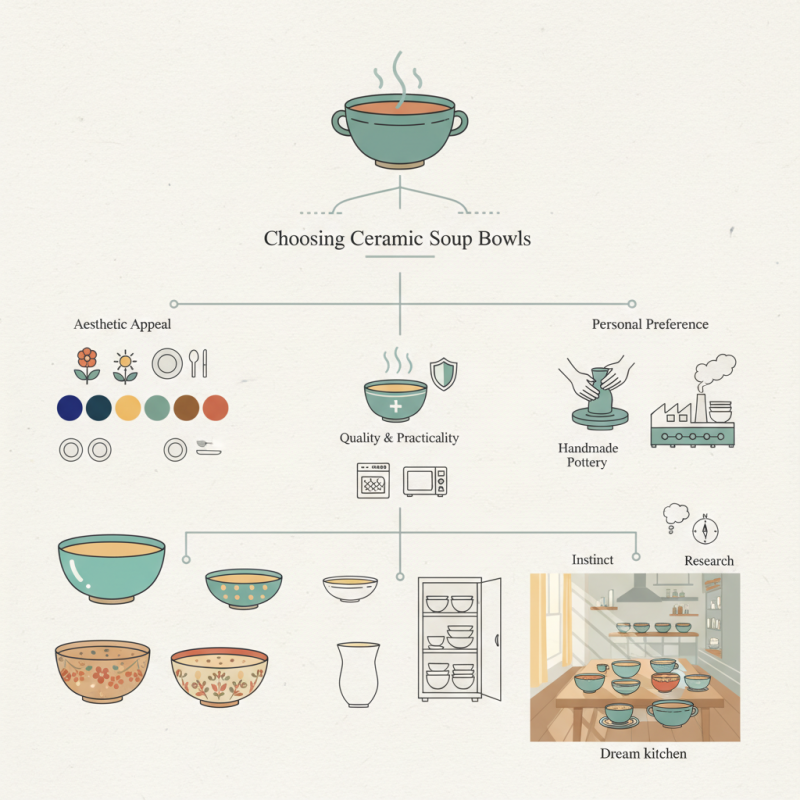
Choosing the right ceramic soup bowls for your kitchen can seem overwhelming. With various styles, colors, and sizes available, it’s important to find the perfect match. Ceramic soup bowls are not just practical; they also add an aesthetic appeal to your dining experience. Think about the colors that complement your kitchen décor. A vibrant bowl can brighten up your meals.
Quality is crucial when selecting ceramic soup bowls. Look for bowls that are durable and chip-resistant. These bowls should be dishwasher and microwave safe for added convenience. You might come across various shapes, including wide and deep designs. Consider how they fit into your cupboard. Sometimes a beautiful bowl can be impractical for everyday use.
Reflecting on personal preferences is essential. Do you prefer handmade pottery or mass-produced items? Each choice tells a different story. Trust your instincts, but also research brands known for their craftsmanship. Visualize your dream setting and let that guide you. In the end, the best ceramic soup bowls are ones that resonate with your lifestyle while serving their purpose effectively.
Factors to Consider When Selecting Ceramic Soup Bowls
Choosing the best ceramic soup bowls requires careful consideration. One important factor is material quality. High-quality ceramic is durable, resistant to chips and cracks. Look for bowls that are fired at high temperatures. This process improves strength and safety.
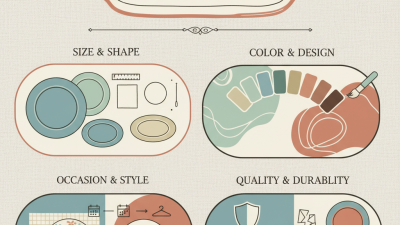
Another factor is bowl size. Bowls should be large enough for hearty soups. Industry reports suggest that the average soup serving is around 2 cups. Thus, selecting bowls with a capacity of at least 24 ounces is wise. This ensures ample serving size for family meals.
Color and design also matter. Bold colors can enhance the dining experience. Reports indicate that vibrant tableware boosts appetite and enhances presentation. However, personal preference should guide design choice.
When selecting ceramic soup bowls, consider weight. Heavier bowls often indicate better craftsmanship. Look for smooth finishes to enhance usability. Remember, aesthetics should not compromise functionality.
Tips: Always check for lead-free certification. This ensures safety in food consumption. Consider purchasing sets that match your kitchen décor. Uniformity can elevate your dining experience.
In conclusion, pay attention to both the technical and the artistic aspects of ceramic bowls. Finding the right balance is essential for an enjoyable soup experience.
How to Choose the Best Ceramic Soup Bowls for Your Kitchen?
| Feature |
Description |
Recommendation |
| Size |
Choose a size appropriate for serving soup, usually ranging from 10 oz to 20 oz. |
Consider 16 oz for a standard serving. |
| Material Quality |
Look for high-fired ceramic that ensures durability and safety. |
Opt for lead-free and food-safe glazes. |
| Design |
Consider styles that match your kitchen decor and personal taste. |
Choose a simple yet elegant design for versatile use. |
| Microwave Safe |
Ensure the bowls are labeled as microwave safe for convenience. |
Check for specific microwave use instructions. |
| Dishwasher Safe |
Opt for bowls that are safe for dishwasher cleaning to simplify maintenance. |
Verify the care instructions for heat and detergent tolerance. |
| Weight |
Consider the bowl's weight for ease of handling, especially when full. |
Select a medium weight for balance between sturdiness and ease. |
Types of Ceramic Materials and Their Benefits
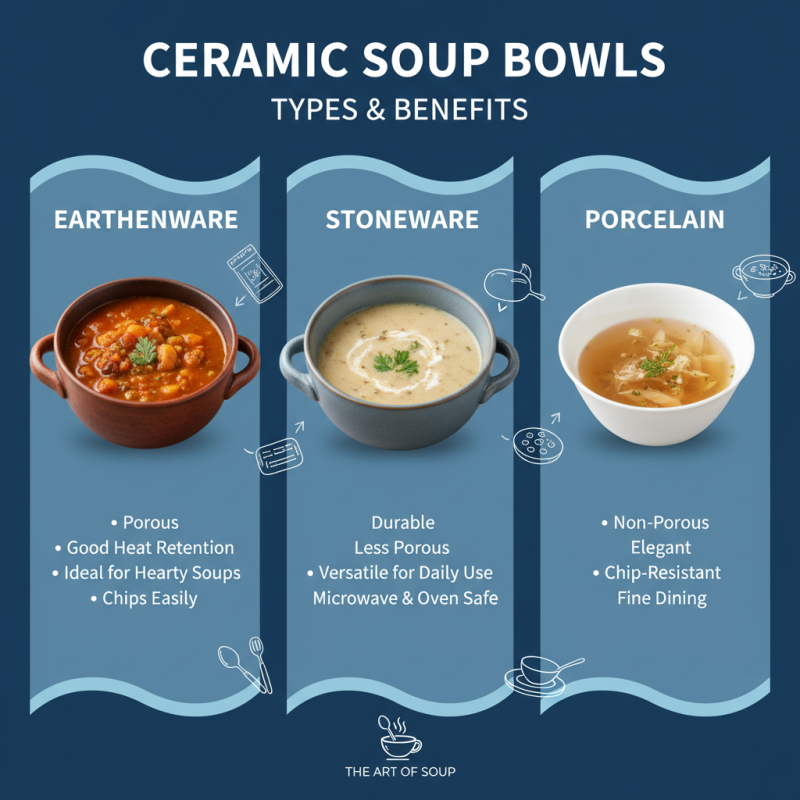
When selecting ceramic soup bowls, understanding the types of materials is vital. Earthenware, stoneware, and porcelain are common choices. Each has unique qualities that can influence your cooking experience. Earthenware is porous and retains heat well, making it great for hearty soups. However, it's more prone to chipping.
Stoneware offers durability and an excellent heat retention property. It's less porous than earthenware, so it resists moisture better. This makes it suitable for everyday use. Stoneware comes in various colors and glazes, adding a decorative touch to your table. While it is robust, imperfections in the finish may require careful consideration.
Porcelain, known for its elegance, is also non-porous. It is the most resistant to staining and is often dishwasher safe. However, it’s more expensive and can be delicate. Understanding these differences helps in making informed choices. Think about your lifestyle and cooking habits. Balancing aesthetics and functionality is crucial, even if it means sacrificing a bit of durability for style.
Size and Shape: Finding the Right Bowl for Your Needs
When choosing ceramic soup bowls, size and shape matter significantly. A good bowl should fit comfortably in your hands. Large bowls hold more soup, perfect for hearty meals. However, they can be cumbersome for everyday use. Smaller bowls offer a quaint serving, ideal for lighter soups or sides. Consider what you typically serve.
The shape of the bowl influences how you enjoy your meal. Wider bowls allow for easy sipping and stirring. Deep bowls retain heat, keeping your soup warm longer. However, deep designs may be challenging to clean. Think about the occasion as well. Casual meals might suit simpler shapes, while elegant dinners might warrant more ornate designs.
Moreover, it's essential to consider how the bowls fit with your kitchen decor. Mixing and matching shapes can create a unique table setting. Create a balance between aesthetic appeal and practical use. Reflect on your habits and preferences to find bowls that genuinely serve your needs. Choosing the right size and shape requires time and thought.
Design and Aesthetic Appeal for Your Kitchen Style
When choosing ceramic soup bowls, consider how they fit your kitchen's design. The shape, color, and finish can either complement or clash with your existing decor. A bowl with a vibrant glaze adds a pop of color, while earth-toned options can bring warmth and coziness. Striking the right visual balance can create an inviting atmosphere during mealtime.
It's essential to reflect on your kitchen's aesthetic. Think about the materials used in cabinetry and countertops. For modern kitchens, sleek, minimalistic bowls may work best. In contrast, rustic kitchens may benefit from handcrafted pieces that showcase imperfections. These small details tell a story, making each meal feel special.
Don’t forget about practical aspects. The bowls should not just look good; they must be functional too. Choosing the right size is crucial for serving sizes. However, finding that perfect size that also matches your style can be a challenge. Sometimes the colors may not match as expected, which requires a willingness to adapt and find new combinations. Embrace the process of selecting pieces that truly resonate with your culinary space.
Maintenance and Care Tips for Long-lasting Ceramic Bowls
Ceramic soup bowls can add charm to your kitchen. However, they require proper maintenance to keep them looking great. First, avoid sudden temperature changes. Placing a hot bowl directly on a cold surface can cause cracking. Instead, let your bowls cool down gradually.
Cleaning is another essential aspect. Use a soft sponge and mild detergent. Abrasive cleaners may scratch the surface. Rinse thoroughly to remove all soap residue, as it can dull the finish. If you notice stubborn stains, a mixture of baking soda and water can work wonders. Make a paste, scrub gently, and rinse well.
Storing your ceramic bowls requires thought as well. Stacking them can often lead to chips or cracks. Use felt pads between bowls to prevent damage. Pay attention to any changes in the color or glaze. These can indicate wear that needs addressing. Taking these steps can prolong the life of your favorite ceramic bowls. Enjoy using them for years!