Choosing Ceramic Dinner Plates in 2026 requires more than matching colors with a dining table. Plates must balance safety, durability, comfort, and responsible production. Market estimates show why this category deserves careful attention. Grand View Research valued the global ceramic tableware market at approximately USD 10.7 billion in 2023 and projects continued growth through 2030. Fortune Business Insights also forecasts expansion, although its figures differ because market definitions and research methods vary. That difference matters. Not every impressive statistic tells the full story.
A practical buying decision starts with the plate in your hand. Check its weight, rim thickness, glaze smoothness, and underside finish. A plate should feel stable, not dangerously heavy. Look for clear information about food-contact safety, glaze testing, and resistance to lead and cadmium migration. In the United States, the FDA regulates ceramicware that contacts food, while European products may follow relevant EU food-contact requirements. Compliance claims still require verification.
Daily use exposes weak design quickly. Fork marks appear on dark glazes. Thin rims chip beside crowded sinks. Uneven bases can scratch a wooden table. Dishwasher and microwave labels help, but they do not guarantee unlimited service life. Follow the manufacturer’s instructions.
Sustainability adds another layer. The United Nations Environment Programme emphasizes resource efficiency and longer product lifespans within circular consumption. A durable set may be more responsible than a cheap replacement cycle, but durability claims need evidence. This guide examines Ceramic Dinner Plates through material quality, testing, design, care, and value. Some choices remain subjective. That is worth admitting. A beautiful plate is not automatically a good plate.
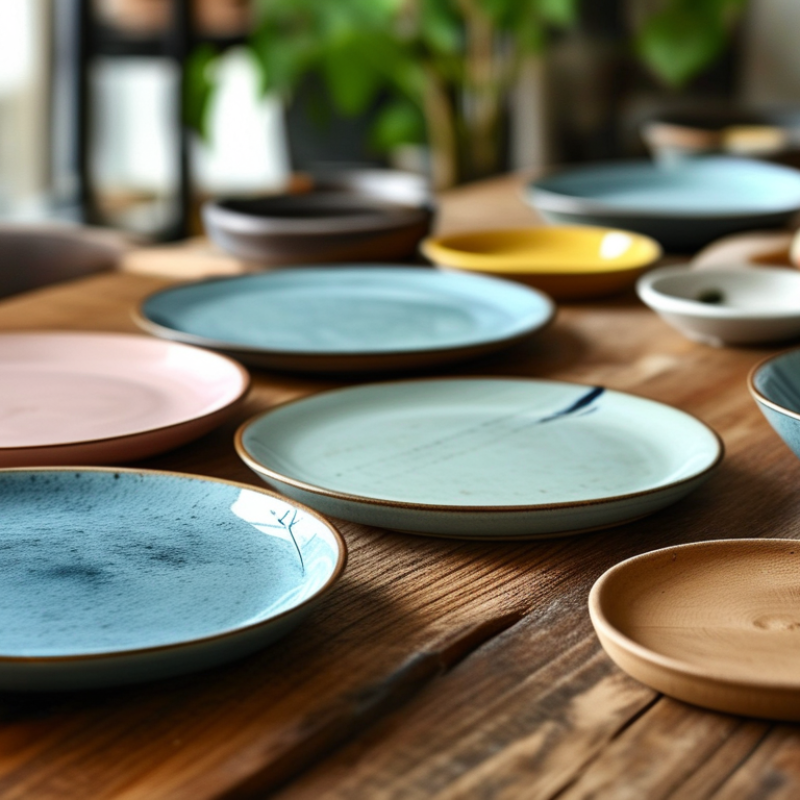
Ceramic dinner plates are tableware made from shaped clay, then hardened in a kiln. A glaze creates the smooth, colored surface that touches your food. The clay body may be earthenware, stoneware, or porcelain, and each type behaves differently. Earthenware feels lighter but can be more porous. Stoneware is usually heavier and suitable for daily meals. Porcelain often has a thinner, refined appearance, though it may feel less forgiving after impact.
These plates matter because they affect safety, comfort, and the rhythm of eating. A balanced plate should feel stable when carrying soup, rice, or roasted vegetables. A deep rim can reduce spills, while a wide flat center gives food a cleaner presentation. In 2026, check food-contact safety information, firing quality, and care instructions instead of trusting appearance alone. Look for clear statements about glaze testing and permitted use. A beautiful plate with hidden crazing, sharp chips, or uneven glazing is not a wise choice. I once underestimated weight; a heavy set looked impressive but became tiring during daily use. That mistake still influences my buying decisions.
Tips: Run your fingers around the rim before purchase. Reject rough edges and hairline cracks. Check whether the plates tolerate your dishwasher and microwave. Avoid sudden temperature changes, such as placing a hot plate on a cold stone surface. Matte glazes can show cutlery marks more easily. Handmade variations may be charming, but they can also create uneven stacking. That trade-off deserves honest consideration.
Water absorption is a practical indicator of ceramic porosity. Lower absorption generally means a denser body that is less likely to retain moisture and staining. For everyday dinner plates, porcelain and other low-absorption ceramic bodies are typically easier to maintain, while more porous bodies may require closer attention to glazing, care instructions, and durability.
Reference: ISO 13006 ceramic-body water-absorption classes. The ranges are technical classification thresholds and should be used together with the manufacturer’s information on food safety, dishwasher use, microwave use, edge strength, and glaze quality.
Choosing ceramic dinner plates in 2026 starts with the clay body, not the color. Stoneware is dense, sturdy, and suitable for everyday meals. Porcelain is lighter and less porous, but its thinner edges can chip after hard impacts. Earthenware feels warmer and more handmade, though it usually absorbs more moisture. Grand View Research’s 2024 ceramic tableware analysis projects continued market growth through 2030, partly driven by demand for durable, design-focused household tableware.
Glaze quality matters as much as the material underneath. Look for plates labeled food-safe, lead-free, and cadmium-free, with testing documentation where possible. A glossy glaze usually cleans easily. Matte and reactive glazes can show fingerprints, utensil marks, or uneven color. Tiny cracks, called crazing, may trap residue over time. The U.S. Food and Drug Administration highlights lead and cadmium migration as key concerns in ceramic food-contact products, especially those with bright decorations or poorly controlled firing. Ask whether the decoration sits under the glaze.
Check the rim with your thumb. It should feel smooth, without sharp pinholes or rough patches. I prefer a slightly heavier stoneware plate for daily use; it survives my crowded dishwasher better. Still, heavier is not automatically stronger. The Ceramic Industry Association reports that firing temperature and water absorption strongly influence durability, yet shoppers rarely receive clear absorption figures. That is a weakness. Before buying, inspect the maker’s care instructions, microwave guidance, and replacement policy. A beautiful plate that cannot handle tomato sauce, heat, or repeated washing may become an expensive regret.
Which ceramic materials and glazes should you consider?
| Ceramic Material | Typical Firing Temperature | Typical Water Absorption | Strength and Durability | Weight and Feel | Best Use | Key Buying Consideration |
|---|---|---|---|---|---|---|
| Porcelain | Approximately 1,200–1,450°C | Usually below 0.5% when fully vitrified | Very hard, dense, chip-resistant, and suitable for frequent use | Light to medium weight with a smooth, refined feel | Everyday dining, formal table settings, and hospitality use | Check for a fully vitrified body, even edges, and a clear indication that the plate is dishwasher and microwave safe. |
| Stoneware | Approximately 1,180–1,300°C | Commonly about 1–5%, depending on formulation and firing | Strong and durable, although exposed edges may chip if handled roughly | Medium to heavy with a substantial, handcrafted feel | Daily meals, casual dining, and rustic or contemporary tableware | Look for a dense body, consistent glaze coverage, and a foot ring that sits flat without wobbling. |
| Earthenware | Approximately 1,000–1,150°C | Often above 5% unless sealed with a suitable glaze | Less durable and more porous than porcelain or stoneware | Usually lighter and more decorative in appearance | Decorative settings, occasional use, and traditional tableware | Use only when the glaze is intact and the manufacturer confirms suitability for food, dishwashers, and microwaves. |
| Bone China | Typically about 1,200–1,250°C | Generally very low when properly vitrified | Strong for its weight, with good resistance to everyday handling | Lightweight, thin, and often slightly translucent | Formal dining, premium everyday use, and occasions requiring elegant presentation | Inspect thin rims carefully for chips and verify that decorations do not contain metallic accents before microwave use. |
| High-Fired Ceramic | Usually above 1,200°C | Low, depending on the clay body and firing schedule | Generally more durable and less porous than low-fired ceramic | Varies from medium to heavy | Busy households that want a balance between durability and style | “High-fired” is not a complete specification; confirm the actual absorption rate and care instructions. |
| Glaze Type or Finish | Appearance | Practical Benefits | Potential Drawbacks | What to Check Before Buying |
|---|---|---|---|---|
| Gloss Glaze | Shiny, smooth, and highly reflective | Easy to wipe clean; helps reduce the retention of food residue | May show utensil marks, fingerprints, and surface scratches more easily | Look for a smooth, evenly distributed surface without pinholes, blisters, or crawling. |
| Matte Glaze | Soft, low-reflection, contemporary finish | Creates a sophisticated appearance and can reduce visible reflections | Some matte surfaces may show grease marks or utensil scuffs and can be harder to clean | Ask whether the finish is dishwasher safe and test whether it wipes clean without leaving a film. |
| Satin Glaze | Between matte and gloss, with a subtle sheen | Offers a balanced appearance and often feels smooth to the touch | Quality varies; uneven satin surfaces may collect residue | Check for consistent sheen, a smooth texture, and clear care instructions. |
| Reactive Glaze | Varied colors, mottling, and flowing tonal effects | Adds visual character and makes each plate look distinctive | Color variation is expected; textured areas may require more careful cleaning | Confirm that the glaze is intended for food contact and inspect for cracks, sharp spots, or unglazed patches. |
| Speckled Glaze | Decorative dots or mineral-like flecks beneath or within the glaze | Can disguise minor marks and complement casual table settings | Rough particles or uneven surfaces may affect stacking and cleaning | Run a finger over the surface and rim to ensure there are no abrasive or sharp particles. |
| Unleaded Food-Safe Glaze | Available in gloss, matte, satin, or decorative finishes | Designed to meet food-contact safety requirements when properly formulated and fired | “Food safe” depends on the complete product and intended use, not only the glaze name | Choose products with food-contact compliance information and avoid damaged, crazed, or heavily worn surfaces. |
Buying note: Water absorption, durability, and thermal-shock performance vary by clay formulation, glaze chemistry, and firing quality. For everyday plates, prioritize a fully vitrified body, a smooth food-contact surface, a stable foot ring, and clearly stated dishwasher and microwave compatibility.
Choosing ceramic dinner plates in 2026 starts with your daily eating habits, not changing trends. Measure your cupboard before buying. A 26–28 cm plate suits most main meals, while smaller plates work better for breakfast, snacks, or limited table space. Leave enough room between place settings. Crowded plates make serving uncomfortable.
Shape affects both presentation and storage. Round plates are dependable and stack easily. Square plates create sharper lines, but their corners may reduce usable cupboard space. Organic shapes feel handmade and relaxed. However, uneven rims can make stacking awkward. I once chose attractive plates that barely fit my dishwasher. It looked like a small mistake, but it became a daily annoyance. Consider the plate’s weight, rim height, and balance when carrying hot food.
Tips: Check the plate’s diameter, depth, and base ring. A wide rim can frame food beautifully, but it reduces serving space. Choose designs that match your table, lighting, and existing bowls. Soft neutral colors are flexible, while strong patterns may dominate simple meals. Look closely at the glaze for smooth coverage and consistent edges. Handmade-style variations can add character, though they may not match perfectly. Confirm care instructions, especially for microwave and dishwasher use. A design can be beautiful, yet impractical for your routine.
Safety starts with the glaze, not the color. The World Health Organization states that no level of lead exposure is known to be harmless. Ask sellers for recent lead and cadmium migration test results, preferably using ISO 6486 methods. Avoid plates with chipped rims, rough patches, or unclear food-contact labeling. The U.S. FDA Food Code 2022 describes food-contact surfaces as smooth, durable, nonabsorbent, and easy to clean. Those words matter at home, too. A beautiful plate can still be a poor daily choice.
Durability needs practical testing. ASTM C373 measures ceramic water absorption, which can indicate porosity and staining risk. Lower absorption usually supports easier cleaning, but it does not guarantee resistance to impact. Check the base for a stable foot ring. Hold two plates together and listen for a clear, even sound. It is an imperfect check, not laboratory proof. I still inspect every plate after dishwashing, because repeated heat cycles expose weaknesses slowly.
When choosing ceramic dinner plates in 2026, compare washing needs, replacement cost, and environmental impact. Appearance should not decide everything.
A dense, glazed plate usually handles daily scrubbing well, but hairline cracks can retain food residue. Hand washing may use less electricity. However, a full dishwasher can reduce water use. ENERGY STAR’s 2024 criteria allow certified dishwashers to use 3.2 gallons per cycle, compared with 5.5 gallons for standard models. Check the actual cycle. It changes the result. Avoid sudden temperature changes, abrasive powders, and unstable stacking. “Ceramic” does not guarantee oven or thermal-shock resistance. A chipped rim is a sensible replacement signal, even when the plate still looks usable. This is easy to overlook.
Cost needs a longer view. Divide the purchase price by realistic service years and weekly uses. A cheap plate can become costly after repeated breakage. Environmental comparisons also require a life-cycle view. Ceramic production involves mineral extraction, kiln heat, glazing, packaging, and transport. The United Nations Environment Programme’s Global Resources Outlook 2024 projects that global resource extraction could rise 60% by 2060 without major changes. That figure is not a ceramic-plate footprint, but it shows why durability matters. A 2023 life-cycle review in the Journal of Cleaner Production found that reusable tableware often performs better than disposables, although washing assumptions can change the result. I would not treat one headline number as universal. Household habits matter.