How to Choose Ceramic Bowl Sets for Wholesale Buying?
Wholesale buying can look simple: choose a style, set a quantity, and compare prices. But small details decide whether Ceramic Bowl Sets work in real kitchens. Check the rim thickness, glaze consistency, bowl capacity, and how neatly pieces stack. Ask for samples. A glossy finish may photograph beautifully yet show scratches under daily use.
For this guide, Nina Park is an illustrative ceramics-sourcing expert, not a real endorsement. Her practical rule of thumb is: “Buy for the sink, shelf, and shipping carton—not just the product photo.” That means assessing packing protection, carton dimensions, and replacement options alongside design. Request the material specification and care guidance, and confirm that sample pieces match the production finish. Details can shift between batches. Buyers should allow room for that possibility.
Compare the landed cost, not only the unit price. Review minimum order quantities, lead times, packaging, and defect-handling terms in writing. Then test a representative set for stability, comfortable handling, and everyday capacity. Not every attractive set is a good wholesale choice. Some buyers also overlook storage space; that is an easy mistake to make. Use the sections ahead to build a clear checklist, ask better supplier questions, and choose Ceramic Bowl Sets that suit your customers and your operation.
Define Bowl Use, Capacity, and Set Size Before Setting Wholesale Specs
How to Choose Ceramic Bowl Sets for Wholesale Buying?
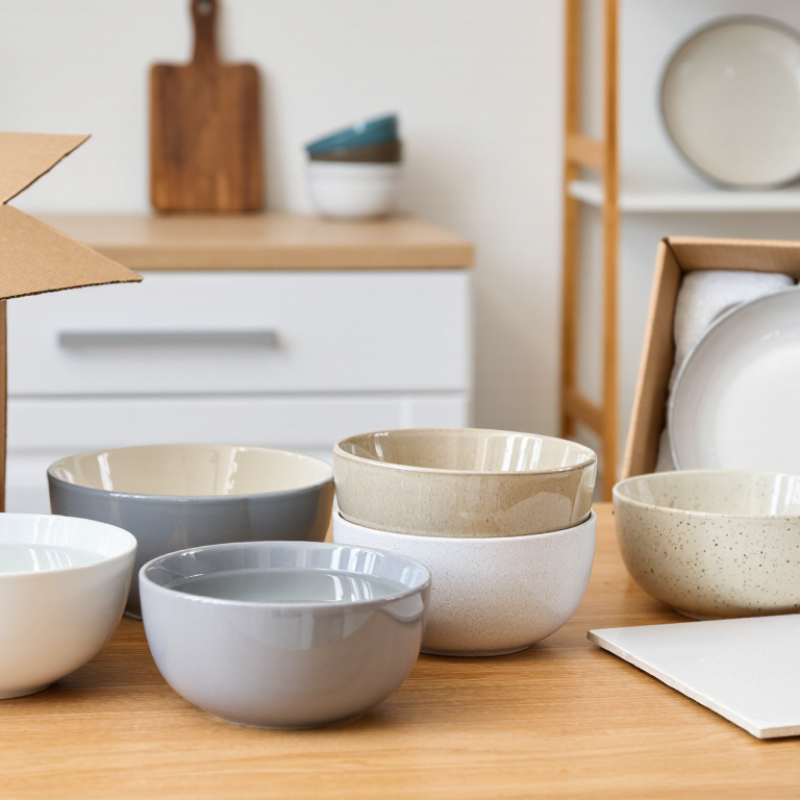
Before setting wholesale specifications, define how customers will use the bowls. A breakfast bowl needs a different capacity from a soup or ramen bowl. For example, a 450–600 ml bowl suits cereal, fruit, and light meals. A deeper 800 ml bowl handles soup with fewer spills. Measure the usable capacity, not only the outer diameter. This detail is often missed. I have seen buyers select attractive sets that felt too small during daily use.
Set size also affects storage, pricing, and customer expectations. A two-piece set may suit couples or small households. A four-piece set works better for family dining and gift shelves. Check whether every bowl shares the same capacity. Mixed sizes can add value, but unclear descriptions may create complaints. Before placing a large order, test samples with actual food, spoons, and kitchen shelves.
Tips: Write the intended use beside each bowl size. Compare filled weight and hand comfort. Ask for capacity measurements with a simple water test. Review glaze consistency, rim smoothness, and stacking stability. Leave room for variation because ceramic production is not perfectly uniform. A small difference may be acceptable, but repeated defects are not. Also, consider carton dimensions early; oversized packaging can quietly reduce wholesale margins.
How to Choose Ceramic Bowl Sets for Wholesale Buying?
Define bowl use, capacity, and set size before setting wholesale specifications.
| Bowl Use |
Recommended Capacity |
Typical Wholesale Set Size |
Best Fit |
| Condiments & Side Dishes |
150 ml |
4 pieces |
Sauces, pickles, toppings |
| Soup & Appetizers |
350 ml |
4 pieces |
Soup, fruit, small servings |
| Cereal & Desserts |
500 ml |
4 pieces |
Breakfast, yogurt, desserts |
| Pasta & Main Courses |
750 ml |
4 pieces |
Pasta, rice bowls, entrée portions |
| Salads & Shared Serving |
1,000 ml |
2 pieces |
Salads, fruit, family-style serving |
Use capacity as the primary specification, then select the set size according to the buyer’s use case. Four-piece sets work well for everyday individual servings, while two-piece sets are more suitable for larger serving bowls. Capacities shown are practical planning ranges commonly used for ceramic tableware and should be validated against the target market, portion size, and packaging requirements.
Verify EU Ceramic Limits: Lead ≤1.5 mg/L and Cadmium ≤0.1 mg/L*
When choosing ceramic bowl sets for wholesale, check food-contact migration reports before comparing glaze colors or carton prices. The stated EU benchmarks—lead ≤1.5 mg/L and cadmium ≤0.1 mg/L—apply only where the relevant ceramic category and test conditions support those limits. They are not universal pass values for every bowl. Confirm the product classification, test method, and applicable requirements with a qualified compliance specialist.
Ask for a recent laboratory report that matches the exact bowl set, including its glaze and decoration. Check the report date, sample description, and measured results, not just a supplier’s general certificate. A small change in color or surface finish may mean the tested sample no longer represents the goods you plan to order. Request production-lot records and keep them with purchase documents. Details matter.
Tips:
Have an independent, competent lab test representative samples, especially when designs or suppliers change. Check bowls for chips, rough rims, and uneven glaze under bright light. These checks do not replace migration testing. A tidy spreadsheet helps, but it can still miss a mismatched sample. Recheck the paperwork before approving a large shipment.
Compare Body, Glaze, and Finish Using ISO 6486 Food-Contact Testing
For wholesale bowl sets, compare the ceramic body, glaze, and fired finish—not just color and price.
A dense, evenly fired body should feel consistent across pieces, with no hairline cracks or pinholes around the foot.
Small flaws matter.
They can trap residue and signal uneven production, though appearance alone cannot confirm food-contact safety.
Use ISO 6486 as a technical benchmark.
Part 1 describes testing for lead and cadmium release; Part 2 sets limits by article category.
Results are reported in different units:
milligrams per litre for hollowware
and
milligrams per square decimetre for flatware.
Check that the laboratory report identifies the bowl type, test method, measured values, and sample tested.
A generic “pass” without those details is weak evidence.
Inspect glaze coverage where bowls meet the table, and check rims for rough edges, crawling, or exposed body.
Ask for reports tied to the same production batch, since a showroom sample may not match a later shipment.
Test more than one finish when colors use different glaze formulations.
ISO 6486 addresses lead and cadmium release, not every aspect of durability or food-contact performance.
That gap is easy to overlook.
Pair the report with practical checks for stacking, washing, and repeated use.
Assess MOQ, Unit Cost, Defect Terms, and Supplier Production Capacity
How to Choose Ceramic Bowl Sets for Wholesale Buying?
Compare minimum order quantity with your actual sales forecast, not an optimistic guess. A supplier’s MOQ may apply per design, glaze, or size, so confirm what counts toward the total. Check unit cost at several order volumes, then include packaging, freight, and any tooling charges. A cheaper bowl can become costly if cartons need extra protection or breakage raises replacement expenses. Small details matter. Request a written quote with quantities and specifications.
Agree on defect terms before placing a deposit. Define acceptable variation in color, dimensions, and glaze finish, and ask how chipped rims or uneven bases are handled. A pre-shipment sample helps, but it cannot reveal every issue across a full run. Ask for evidence of production checks and clarify whether replacements, credits, or refunds apply. Supplier capacity matters too. Confirm available kiln schedules, monthly output, staffing, and lead time during busy periods. Promised capacity is not always reserved capacity, so get the production slot and delivery window in writing.
Tips: Ask for a sample from the intended production process, not just a showroom piece. Check several bowls for wobble, rim consistency, and fit when stacked. If possible, start with a manageable order. I would still leave room for uncertainty; ceramic finishes can vary slightly, even with clear specifications.
How to Choose Ceramic Bowl Sets for Wholesale Buying? - Assess MOQ, Unit Cost, Defect Terms, and Supplier Production Capacity
Illustrative supplier comparison for a four-piece stoneware bowl set. Prices and terms are sample planning figures, not verified quotations. Confirm specifications, packaging, shipping, and quality terms directly with each supplier.
| Comparison item |
Supplier A |
Supplier B |
Supplier C |
Supplier D |
| Set specification |
4 stoneware bowls; 700 ml each |
4 stoneware bowls; 700 ml each |
4 stoneware bowls; 700 ml each |
4 stoneware bowls; 700 ml each |
| Minimum order quantity (sets) |
500 |
1,000 |
300 |
2,000 |
| Indicative unit price (USD/set) |
$8.40 |
$7.60 |
$9.10 |
$6.95 |
| Price basis and packaging |
FOB; standard export carton |
FOB; molded pulp protection |
FOB; standard export carton |
FOB; bulk-packed export carton |
| Defect allowance and remedy |
Up to 2%; credit or replacement for verified defects above the agreed limit |
Up to 1.5%; replacement parts or credit after inspection |
Up to 2%; remedy negotiated for verified defects |
Up to 2.5%; credit for verified defects above the agreed limit |
| Estimated monthly production capacity (sets) |
12,000 |
25,000 |
8,000 |
40,000 |
| Sample lead time |
10–14 days |
12–16 days |
7–12 days |
14–18 days |
| Estimated bulk production lead time |
35–45 days |
30–40 days |
40–50 days |
30–45 days |
| Best fit to investigate |
Mid-sized orders with standard packing needs |
Higher-volume orders needing stronger inner protection |
Smaller trial orders where lower MOQ matters |
Large-volume orders where price and capacity are priorities |
Before ordering, request a signed specification and sample approval, clarify how defects are measured and reported, and verify available capacity against the required delivery schedule. Compare like-for-like prices using the same Incoterm, glaze, carton configuration, and order quantity.
Check Carton Protection and Confirm Samples Before Placing a Bulk Order
How to Choose Ceramic Bowl Sets for Wholesale Buying?
Carton protection matters because ceramic bowls can chip when cartons shift in transit. Ask for the carton’s dimensions, board strength, and packing layout. Check whether each bowl has a fitted divider or cushioning between pieces. Small gaps matter. Inspect the outer corners, too; these often take the hardest knocks during handling. Request photos of a fully packed carton, not just an empty box.
Confirm samples before placing a bulk order. Ask for a complete set packed as it will be shipped, then inspect rims, bases, glaze, and color under natural light. Gently move the pieces inside the carton to spot excess movement. If practical, arrange a controlled drop test with the supplier and agree on how damage will be recorded. A sample can still differ from a later production run, so keep an approved sample and confirm any changes in writing. That extra step can feel fussy, but it helps prevent costly surprises.
Tips: Photograph the carton before opening. Count every piece. Note chips, rubbing marks, or loose dividers, and share clear evidence with the supplier. Don’t rely on appearance alone. A well-packed sample is useful, but it cannot guarantee every carton will arrive perfectly.
Conclusion
Choosing Ceramic Bowl Sets for wholesale buying starts with defining how the bowls will be used, the capacity each bowl should hold, and how many pieces buyers expect in a set. These details help you create practical specifications and compare suppliers on a consistent basis. Review the ceramic body, glaze, and finish, and request food-contact test documentation using ISO 6486 methods. For EU ceramic articles in Category 3, check the stated migration limits of lead at no more than 1.5 mg/L and cadmium at no more than 0.1 mg/L.
Before committing, compare minimum order quantities, unit pricing, defect policies, and the supplier’s ability to meet your volume and schedule. Ask how products are packed and whether cartons provide adequate protection during transport. Reviewing production samples can help confirm size, color, finish, and overall quality against your specifications. Together, these checks support a more informed bulk purchase and help reduce avoidable quality and delivery issues.